OKRs and Accountability: Beyond Goal Tracking
Lead
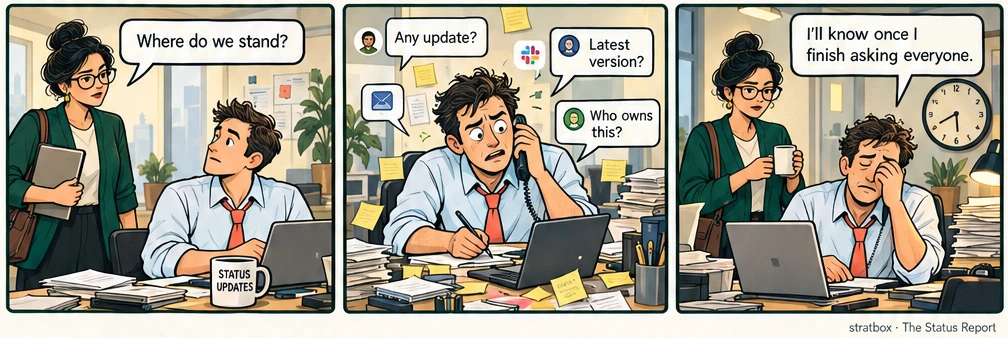
OKRs fail less often because of the framework and more because nobody manages the work behind them. Key results describe outcomes. They do not say who will do what by when, and that missing layer is where most OKR programs quietly stall.
TL;DR: Give every key result one owner, link it to the initiatives meant to move it, review it weekly on evidence instead of confidence scores, and keep the list short. That turns OKRs from a quarterly ritual into a plan you can manage.
Why do OKR programs stall?
The arc is familiar: excitement in Q1, compliance in Q2, quiet abandonment by Q4. Five patterns cause most of it.
1. Objectives without owners
Shared ownership means nobody feels on the hook. When a key result slips, the conversation is about the team instead of a decision by a person.
2. Quarter-end scoring
Set in week 1, scored in week 13, a black box in between. By the time you see 20%, there is no time left.
3. Key results without initiatives
"Reduce churn to 4%" says nothing about how. Without links to initiatives, you cannot tell whether the plan is working or the metric moved for other reasons.
4. Confidence scores based on feelings
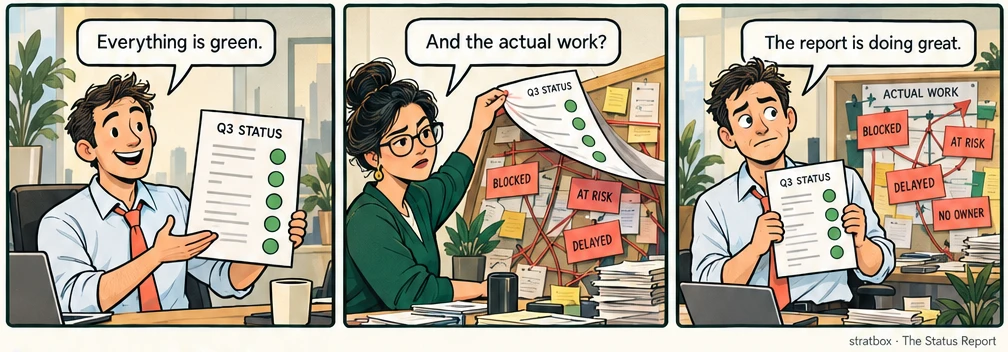
An owner who is 70% confident on Monday is often 70% confident every Monday, until the quarter ends at 30%.
5. Too many OKRs
Five objectives with four key results each, per team, means hundreds of goals. Focus, the whole point, disappears.
What is the missing layer?
Commitments. Think of execution in three layers:
- Strategy: where we are going and why.
- Goals (OKRs): how we will know we got there.
- Commitments: who will do what, by when, to move each goal.
Most OKR tools cover the first two. The third is where execution lives, and where the strategy execution gap opens.
How do you make OKRs stick?
- One owner per key result. They do not do all the work, but they own the outcome and raise the flag.
- Link key results to initiatives. Then the review asks the right question: are the initiatives on track, and are they moving the metric?
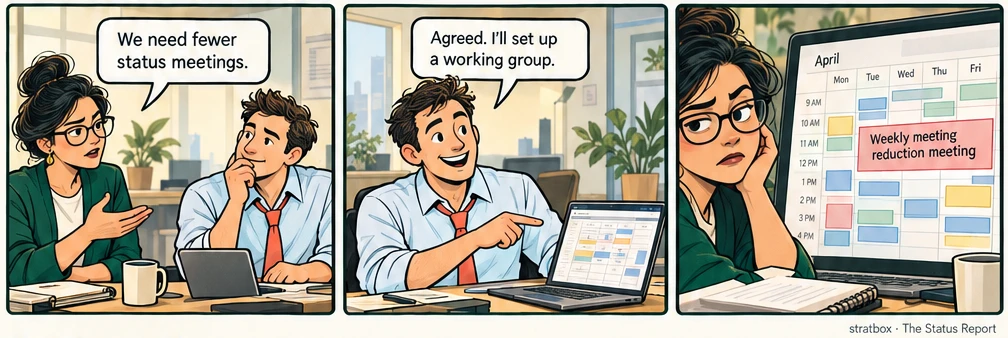
- Review weekly, on evidence. Milestones hit, dependencies cleared, early metric movement. Fold it into your existing operating cadence instead of adding a meeting.
- Keep the list short. Three objectives, three key results each.
- Check what worked. At quarter end, ask which initiatives moved results and which only consumed effort.
What does it look like in practice?
- Objective: help new customers reach value sooner.
- Key result: raise 14-day activation from 45% to 60% this quarter.
- Initiative: simpler onboarding plus a guided first session.
- Owner: the customer-success lead.
- Commitment: pilot the new onboarding with the next 20 customers by month end.
The guide ships on time, but only half the pilot customers attend their session. The owner flags the initiative as at risk, finds the attendance barrier and proposes a fix. The weekly review assigns a new invitation process and a date to check it. Shipping the guide proved a deliverable exists. It did not prove customers activate faster.
What should you ask in the weekly review?
- What evidence changed since last week?
- Is that evidence about activity, outcomes or both?
- Which dependency threatens the target?
- Who owns the next step, and when do we check its effect?
Where does stratbox fit?
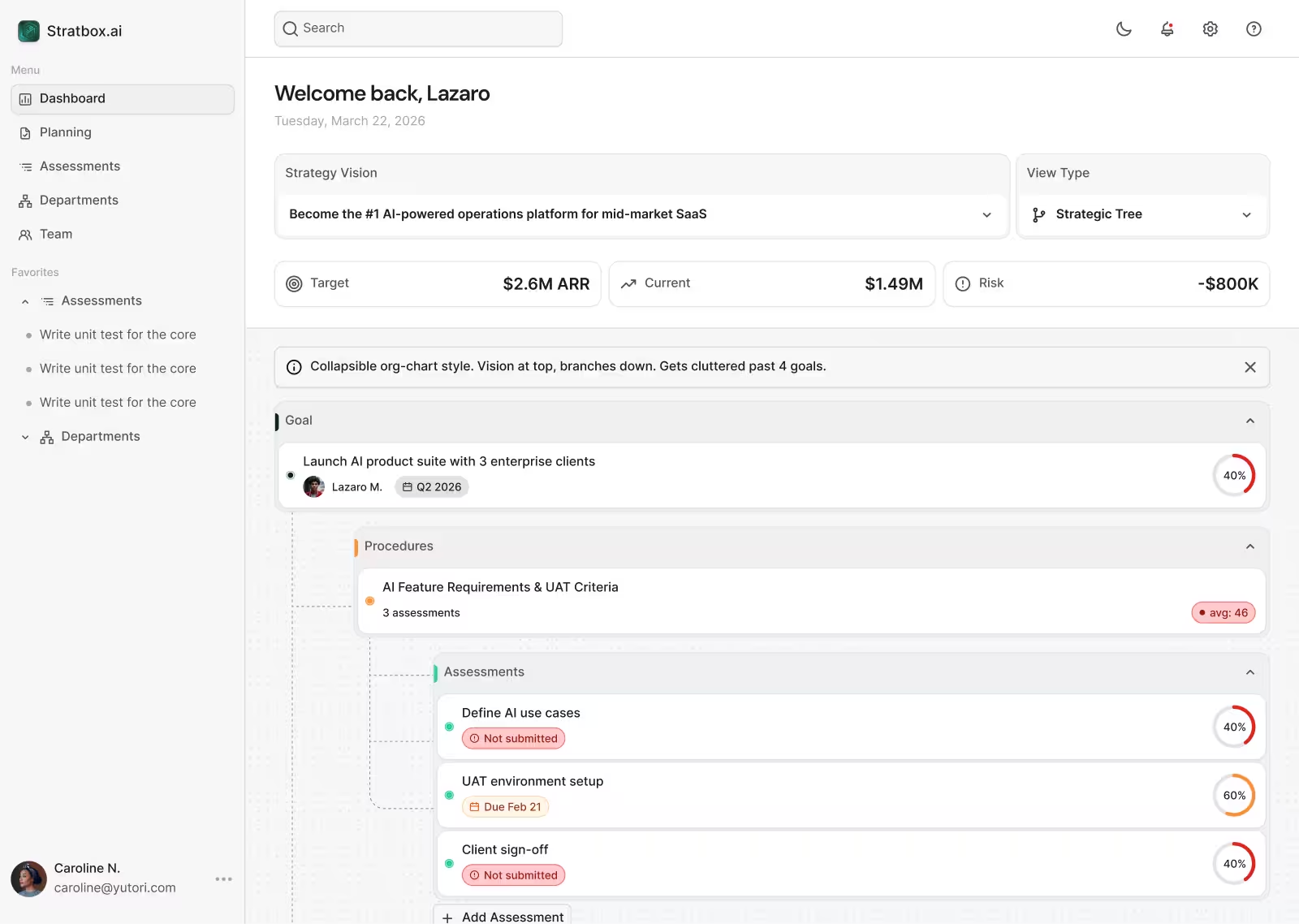
OKR software is good at recording goals. stratbox adds the layer underneath: each goal tied to an owner and the procedures that deliver it, checked against evidence from the tools your teams already use, with a flag when something will slip. Use it alongside OKRs or your own planning framework. Read What Is Accountability Intelligence? for the model.
Frequently asked questions
Why do OKRs fail?
Usually not because of the framework. Key results lack a single owner, they are not linked to the initiatives that should move them, and progress is self-reported and only scored at quarter end.
Who should own a key result?
One person. A team can share an objective, but each key result needs a single name who raises the flag when it is at risk.
How often should OKRs be reviewed?
Weekly, on evidence: milestones hit, dependencies cleared, early metric movement. End-of-quarter scoring alone finds problems too late.
How many OKRs should a team have?
Three objectives with about three key results each is a healthy ceiling. More than that and focus disappears.
Take the Strategy Execution Gap Scorecard to see where your strategy leaks and what to fix first.
Get your score →