Operating Cadence: A Practical Guide
Lead
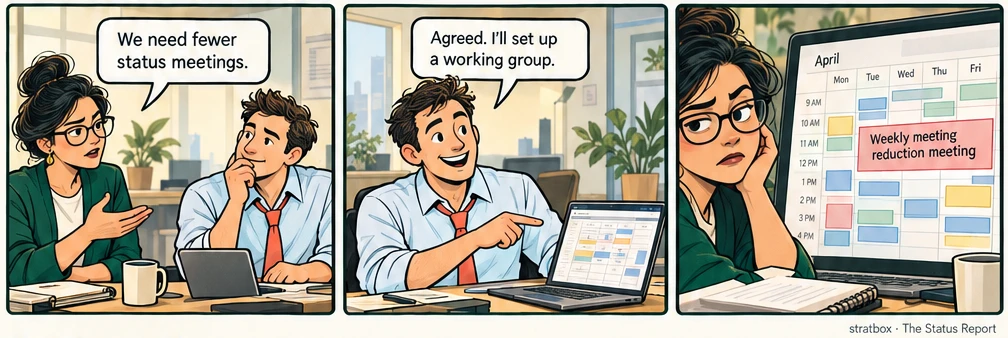
An operating cadence is the set of weekly, monthly and quarterly reviews a company uses to turn strategy into decisions. A good one ends every meeting with a decision. A bad one fills the calendar while execution drifts.
TL;DR: Run three layers: a 30-minute weekly execution review, a monthly operating review and a quarterly strategy review. Give each one a decision to produce, move status to pre-reads, keep one source of truth, log decisions and audit the cadence every quarter.
What is an operating cadence?
It is a decision system, not a meeting schedule. Each review answers a specific question at a specific altitude, and its output feeds the layer above or below. If a meeting does not change what anyone does next, it is not part of your cadence. It is just a meeting.
What are the three layers?
Weekly: execution
Question: are this week's commitments on track, and what is blocked? Keep it to 30 to 45 minutes, review only exceptions, and send every blocker out with an owner and a date.
Monthly: operating review
Question: are our initiatives producing the outcomes we expected? Review results against targets, look for repeated slips, and decide to double down, re-scope or stop.
Quarterly: strategy review
Question: is the strategy still right, and what do we commit to next? Check last quarter's outcomes, adjust priorities on evidence, set owners, and retire work that no longer matters.
What makes a cadence hold?
- Every meeting ends in a decision. Continue, adjust, escalate or stop. A meeting that never decides gets merged or cut.
- Pre-reads replace presentations. Status is available before the meeting, so the time goes to the hard conversations.
- One source of truth. If the weekly uses a spreadsheet, the monthly uses slides and the board pack starts from scratch, the cadence breaks at every handoff.
- Log decisions, not just actions. A decision log stops the same debate from reopening every month.
- Audit the cadence quarterly. Meetings pile up like technical debt. Ask of each one: does it still produce decisions?
What does a sample cadence look like?
A starting point for a leadership team. Adjust timings to your size.
Weekly execution review, 30 minutes
Owner: Chief of Staff or operations lead. Pre-read: commitments due, overdue dependencies, changes in outcome metrics.
- 5 minutes: what changed since last week.
- 15 minutes: blocked or at-risk commitments only.
- 10 minutes: agree actions, one owner each, with a date.
Monthly operating review, 60 minutes
Owner: COO or business lead. Compare results with targets, dig into repeated blockers, and decide which initiatives get more resources, a new scope or a stop.
Quarterly strategy review, 90 minutes
Owner: executive sponsor. Review which initiatives changed outcomes, revisit assumptions, and leave with owners, targets and an explicit stop list.
Is there a template I can copy?
Yes. Use one record per commitment, in whatever tool you already use:
- Strategic priority: the outcome this work supports
- Commitment and owner: the deliverable, and one accountable person
- Due date and evidence: the date, and a link to visible progress
- Dependency and risk: what is needed, from whom, by when
- Decision: continue, adjust, escalate or stop, and why
- Next step: owner, date, expected effect
Who owns the cadence?
Usually a Chief of Staff or Strategy Ops leader. They are the architect, not the note-taker: they design the system, protect it, notice drift, and make sure each layer changes the next. A good cadence keeps running when its owner is on vacation.
Where do cadences usually break?
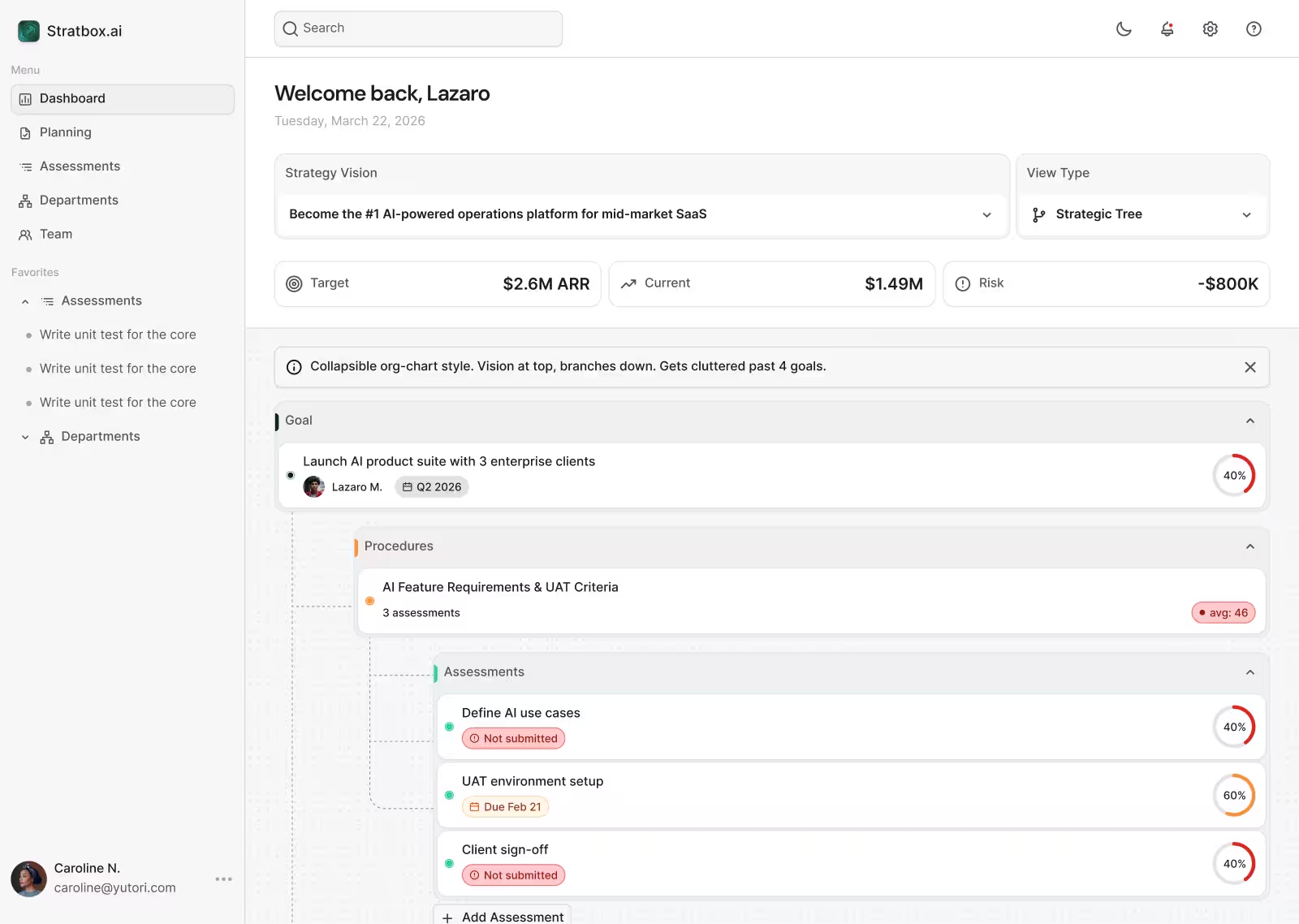
Between meetings. Commitments made on Monday are forgotten by Wednesday and rediscovered as surprises at the monthly review. stratbox keeps those commitments tied to the goal they serve, checks them against evidence from the tools your teams already use, and flags risk before the next review, so meetings are about decisions, not discovery. See OKRs and Accountability for how goals connect to commitments.
Frequently asked questions
What is an operating cadence?
The recurring set of reviews a company uses to run itself, weekly, monthly and quarterly, designed so each one produces a decision that feeds the next.
How long should a weekly execution review be?
About 30 minutes for a leadership team, covering only exceptions: what is blocked, at risk or newly done.
Who owns the operating cadence?
Usually a Chief of Staff or Strategy Ops leader. Their job is to design the system and protect it, not to take notes.
How do you stop meetings from multiplying?
Give every meeting a decision it must produce, move status updates to pre-reads, and audit every recurring meeting once a quarter.
Take the Strategy Execution Gap Scorecard to see where your strategy leaks and what to fix first.
Get your score →